


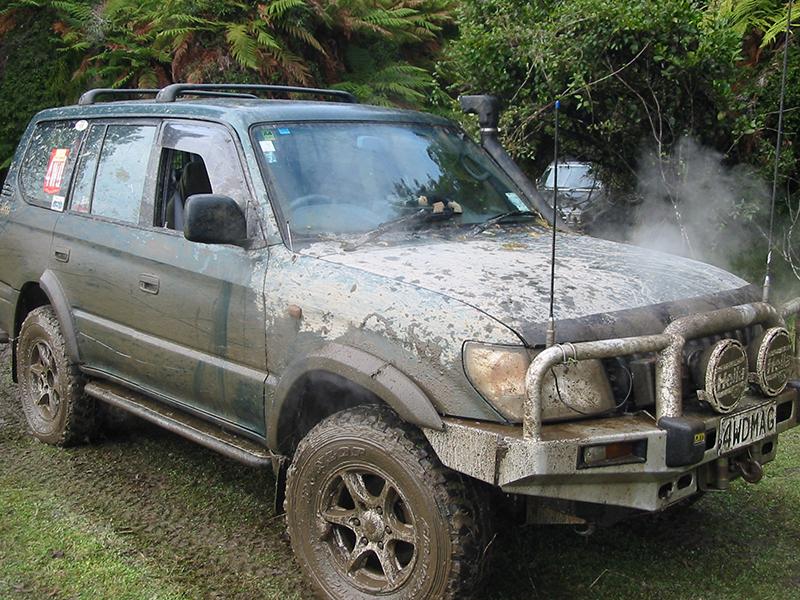
Mud plus dirt, dust, sand and more mud – that’s what makes servicing 4WD’s more challenging than servicing standard vehicles, at least for those 4WD vehicles that venture further offroad than the grass verge outside the school or a trip
to the boat ramp!
4WD’s tend to travel in groups, both for companionship but also mutual safety in case recoveries are required. Often to get to an offroad destination there will be a convoy over local metalled back country roads – which generally means travelling in a dust cloud for all but the lead vehicle putting extra load on filters not to mention issues with suspension and steering components from the abrasive dust particles.
4WD vehicles may be traversing sand (usually a beach with added salt water spray) or areas of mud – often quite deep! In the South Island there may be numerous crossings of braided rivers, again with water covering at the least the full underbody and potentially to near the top of the bonnet (assuming the vehicle at least has a snorkel!). All of these environments add aggressive part damaging materials to the exposed vehicle parts.
Outside the environmental challenges the tracks will be rough and will often use full suspension travel (which may be further magnified by suspension modifications), larger wheels and tyres are regularly fitted increasing unsprung weight and the leverage on suspension components.
All of this means there is significant extra potential for wear and tear, especially in the undercar area (suspension, transmission, exhaust) plus increased risk of corrosion to suspension and body parts.
Given the above operating conditions workshops should scrutinise 4WDs that appear to be used off-road more closely during servicing, especially looking at components that may be impacted by off road driving such as bearings, suspension bushes, brakes and drive train. In some cases it may be advisable to suggest reduced service intervals to cater for the adverse conditions or fitting upgraded components when repairing the vehicle to avoid future issues.
Another area to consider is the electrical system, often 4WDs have extra electrical requirements over other vehicles to power accessories, recovery winches, extra lighting and for overnight off the grid camping (portable fridges are a common accessory). They may have a dual battery setup or uprated alternator, or even solar panels added into the system. Again, alternators get exposed to water and mud frequently so a more detailed visual and operating check would be a good idea.
So when servicing a 4WD it is wise to think about the conditions they may be used in and alter your normal inspection procedure to allow for this.