


New Zealand’s Choice of Repairer Industry Leaders Group (ILG) met to set out what independent workshops need from automotive Right to Repair legislation, now that both Labour and National have committed to reform.
The ILG says workshops need vehicle-specific specifications, diagnostic information and software access to complete work they are already trained to do, and that fair access can be delivered without putting intellectual property, professional standards or motorists’ protections at risk.
“The repair skills are already in the workshop. The missing piece is access,” says ILG Chair Peter Morton. “A technician should not have to send a customer elsewhere because the final step in a repair is locked behind a manufacturer’s system.”
The ILG welcomes Labour’s commitment to fair access to repair information and National’s commitment, if re-elected, to progress Dan Bidois’ member’s bill. It recognises Labour’s Commerce and Consumer Affairs spokesperson Arena Williams and National’s Northcote MP Dan Bidois for championing motorists’ choice and advancing reform.
“Arena Williams and Dan Bidois have listened to workshops and helped bring this issue into the political mainstream,” Morton says. “Independent workshops have backed the campaign, including with their own money. Their determination has helped secure a game-changing breakthrough.”
Morton says the ILG used today’s meeting to work through the questions now being raised about intellectual property, training, warranties and responsibility.
“These are fair questions, and they have practical answers. They should be settled with evidence and sensible safeguards. They should not become another reason to leave motorists and workshops waiting.”
The manual has gone digital
Chris Ring, Managing Director of Pit Stop, says the simplest comparison is with the information once found in a vehicle handbook or a workshop’s technical manuals.
“The handbook in the glovebox set out servicing requirements. Workshop manuals supplied the detailed specifications, torque settings and wiring diagrams. Much of that information is now digital, and it needs to be accessible to the technician doing the job,” Ring says.
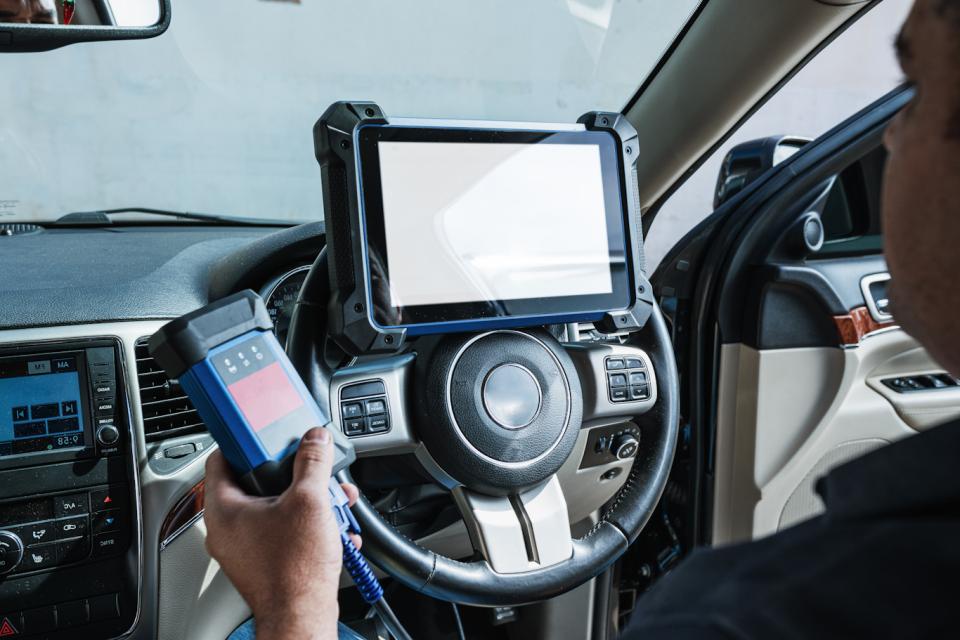
“A technician may need access to a greyed-out diagnostic function, a manufacturer’s fault-code information, or a technical service bulletin explaining a known problem and its correction. After a repair, they may need to reinitialise a component or perform the required reset.
“We are talking about completing the repair properly, including clearing a warning after the underlying fault has been fixed. Changing where the information is stored should not change the customer’s right to choose their workshop.”
Access supports trained technicians
Jason Wilson, CEO of Midas New Zealand, says the debate risks confusing technical access with learning a trade.
“Our technicians already service and repair these vehicles. They are not asking for a YouTube lesson in how to be a mechanic. They need the manufacturer’s information for the particular vehicle in front of them,” Wilson says.
“Training and access work together. A qualified technician cannot be expected to memorise every specification or know about a service bulletin they cannot obtain. Withholding that information does nothing to improve the quality of the repair.”
The ILG supports appropriate credentials and safeguards for restricted safety and security information, drawing on Australia’s experience.
Repair access can protect intellectual property
Australia’s scheme expressly excludes trade secrets and software source code. It provides paid access to service and repair information, with copyright protections and compensation provisions. It demonstrates that repair access and protection of manufacturers’ intellectual property can coexist.
“We want to fix the car, not copy it,” Morton says. “Access to a wiring diagram, a fault code or a service bulletin is a very different proposition from obtaining the designs or source code to reproduce a vehicle. We are seeking fair access on fair commercial terms.”
Workshops remain responsible for their work
Ring says fair access does not remove a workshop’s responsibility for the repairs it undertakes.
“We stand behind our work now. We will continue to stand behind it. Giving us access to the correct information does not transfer responsibility for our workmanship to the manufacturer,” he says.
New Zealand’s Consumer Guarantees Act already requires consumer repair services to be performed with reasonable care and skill.
“The customer deserves a properly repaired car and a workshop that takes responsibility,” Ring says. “Fair access helps us deliver both.”
Morton says the ILG will work with the next government to turn political commitments into a practical law. “The industry has invested in the people and the tools. It is time to open the information needed to finish the job.”