


Lane keep assist. Adaptive cruise control. Autonomous emergency braking. Blind spot monitoring. Traffic sign recognition. A decade ago, these were premium-badge extras. Today they’re standard equipment across most of the new vehicle parc landing in Australian and New Zealand workshops, from city hatchbacks to full-size utes. The safety upside is real – but so is the flip side. ADAS-related fault codes have gone from an occasional curiosity to a near-daily line on the job sheet.
Why the fault codes keep climbing
More sensors, tighter tolerances
Modern vehicles carry a small network of forward-facing cameras, radar modules, ultrasonic sensors and, increasingly, LiDAR – all of which must agree with each other and with the vehicle’s reference geometry. A sensor doesn’t need to fail outright to trigger a fault; it just needs to drift a few millimetres out of alignment or lose sync with another module after a software mismatch. The more sensors a vehicle carries, the more places for something to go quietly wrong.
Bread-and-butter jobs are now ADAS jobs
Windscreen replacement, wheel alignment, suspension repairs, panel work, even a tyre change on some platforms – none of these used to touch the electronics. Now a windscreen job can mean a forward-facing camera coming off its mount, and a wheel alignment can shift a radar’s reference angle just enough to demand recalibration. Skip that step and an ADAS fault – or worse, a mis-calibrated system that never throws a warning at all – is close to guaranteed.
Software is doing more of the work, and ageing faster
ADAS is largely a software problem wearing hardware. Manufacturers push updates to shift safety thresholds, patch known issues or add functionality, and a vehicle running outdated software can present faults that look mechanical or electrical but trace straight back to a firmware mismatch. Without OE-level access, chasing that down manually eats hours technicians don’t have.
Local conditions add their own noise
Layer Australian and New Zealand driving conditions on top – dust and insect strike on regional highways, harsh glare, stone chips on windscreens, corrugations and unsealed roads jarring sensor mounts – and it’s easy to see why ADAS warnings are turning up more often, even on vehicles with no obvious damage.
Worth remembering: an ADAS fault is rarely “just a light on the dash.” These are active safety systems. A vehicle that leaves the workshop with a mis-calibrated camera or radar can pass every visual check and still be unsafe.
What’s actually at stake
A missed or botched calibration isn’t just an annoying comeback. It’s a safety system that’s been signed off as roadworthy when it isn’t. The exposure runs well past the invoice – comebacks, warranty disputes, and in the worst case a genuine safety incident with the workshop’s name on the paperwork. It’s little surprise some independents are quietly turning ADAS-adjacent work away rather than risk getting it wrong. The problem is that means turning away a growing, and increasingly profitable, part of the job mix – permanently, not just for this one car.
Closing the gap
Get calibration-capable equipment, not just a scan tool
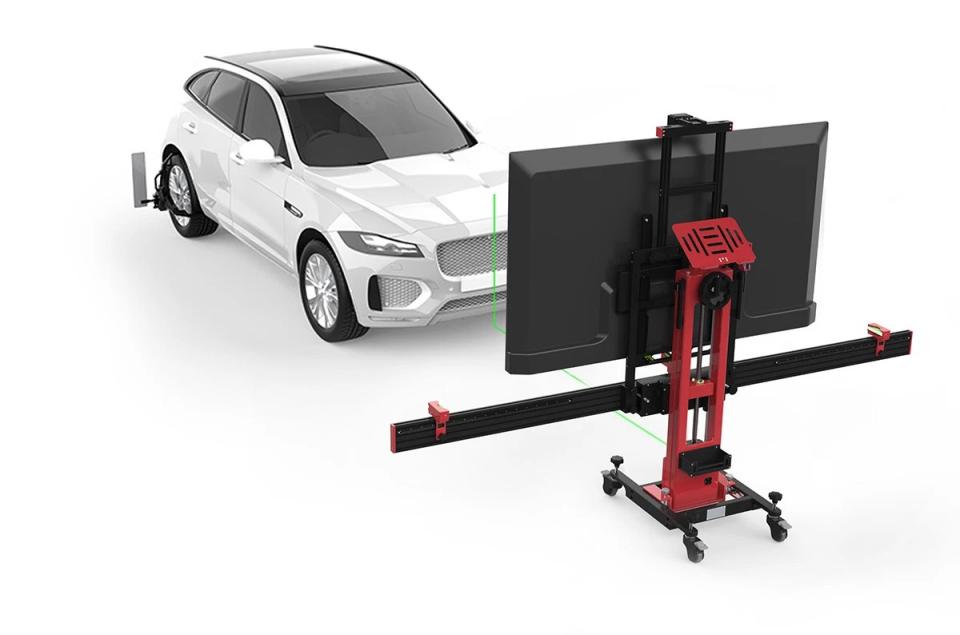
A basic code reader will read the fault; it won’t fix it. Static and dynamic calibration both need purpose-built kit – target boards, the right floor space and lighting, and software that walks the technician through the OEM-specific procedure step by step rather than leaving them to guess. It’s the difference between clearing a light and actually restoring the system to spec.
Know what triggers calibration – and prove it worked
Every manufacturer has its own rules for what triggers calibration, and whether it’s done statically, dynamically, or both. Guesswork is where liability creeps in. A platform that documents a clear pass or fail result gives the workshop a paper trail as well as a properly calibrated car – useful for the customer, and just as useful if the job is ever questioned.
Keep vehicle coverage and training current
New platforms land in the Australian and New Zealand market every month, and coverage that was current twelve months ago won’t necessarily reach this year’s arrivals. Regular software updates and refresher training are what keep a technician confident on the vehicle in front of them, instead of guessing.
Bring the customer into it
Most drivers have no idea a windscreen replacement or a wheel alignment can affect a safety system. A two-minute explanation of why calibration is being carried out turns what could look like an upsell into a trust-building safety conversation – and a legitimate line on the invoice rather than a hard sell.
ADAS isn’t going away – the sensor count only goes up from here
Workshops that build calibration capability now are the ones that will be trusted with this work as it moves from exceptional to standard. If your workshop is seeing more ADAS-related fault codes and wants a look at the calibration equipment, training and support available across Australia and New Zealand then Precision Equipment have the Launch range of ADAS calibration equipment including the X-431 ADAS ECO. This comes with three targets – the VW LDW target for VW-Audi group vehicles, ACC radar target and the Triangular calibration cone.