



In April 2020, data from Apple Mobility Trends(1) suggested that motorists in Australia were driving 70 percent less compared with January 2020 and in New Zealand for level 4 nearly 90 percent less. In the past couple of months vehicle usage has improved and requests for driving directions in Apple Maps has returned to baseline levels.
“We pored over mobility data from Apple, Google and the local transport authorities. During Covid-19 we found that vehicles were being used less no doubt thanks to the prevalence of working from home,” explains William Ng, Marketing Manager Falken Tyres Australia.
With the reduction of vehicle usage, the method in which the vehicles were parked and stored affected tyre conditions. When cars are not driven and are parked for certain periods, flat spots can occur on the tyres.
“A car can get a tyre flat spot even if it’s parked for a few days,” Daniel Holmes, Technical Services Officer Falken Tyres Australia elaborates. “This is generally temporary and can be fixed by going for a drive. There are other situations where the flat spot is more semi-permanent and that’s where we recommend a few more measures.”
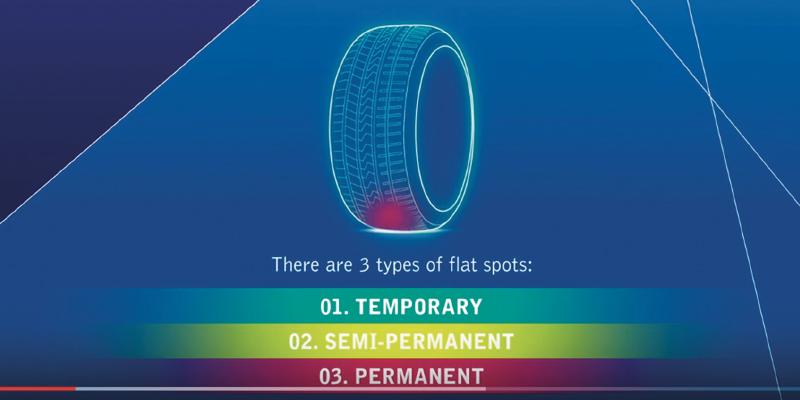
There are three types of flat spots: temporary, semi-permanent and permanent. All three kinds of flat spots will cause a ride disturbance.
Temporary flat spots occur when vehicles are parked for a period of days to weeks. Semi-permanent flat spots occur when vehicles are parked for extended periods of a month or more. Permanent flat spots occur when mechanical factors, such as brake lock-up, occurs.
Temporary flat spots will disappear once the tyre has reached operating temperature; allowing the tyre to regain shape. Semi-permanent flat spots can be removed by an authorised tyre dealer or by driving so the tyre reaches operating temperature and then a) removing the tyre(s) and storing horizontally, or b) placing the vehicle on jack stands.
Permanent flat spots are not repairable.
Incorrect tyre pressure and colder temperatures can increase the risk of a tyre flat spot.
If the vehicle is being parked for extended periods of time, Falken recommends storing the vehicle on jack stands, usage of wheel dollies or increasing tyre pressures. Increasing the tyre pressure from as little as 3 psi can reduce the occurrence of flat spots.
For more information view the informational video: https://youtu.be/n7XJkZVWh4M