


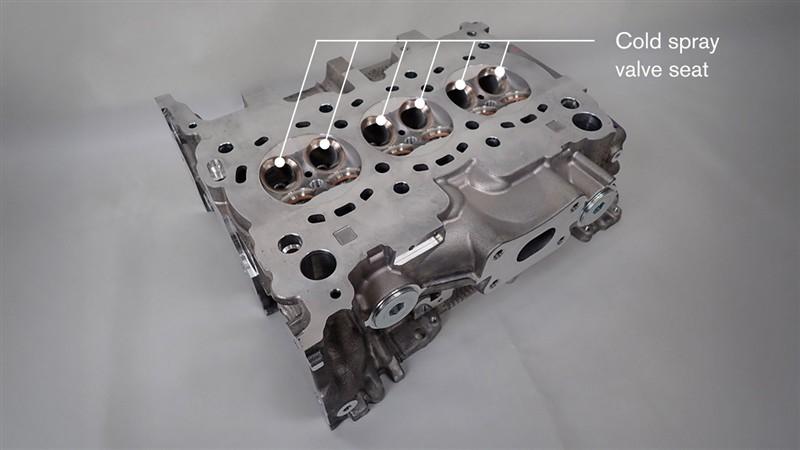
Cold spray technology is now being applied by Nissan to its new 1.5-litre turbocharged engine, which is exclusively designed for power generation within the third-generation e-POWER hybrid powertrain.
The first vehicle globally to feature this new e-POWER system is the Qashqai compact crossover, which began production at Nissan’s state-of-the-art factory in Sunderland, UK in July.
Innovative valve seat design for groundbreaking new engine
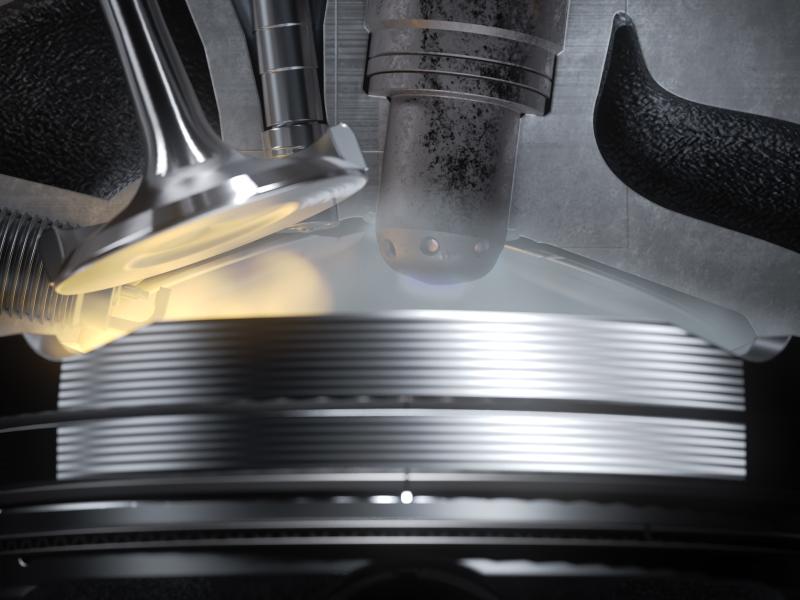
The new 1.5-litre turbocharged engine (codename ZR15DDTe) employs Nissan’s proprietary STARC concept, which elevates thermal efficiency to 42 percent by stabilising in-cylinder combustion.
A key element of the STARC concept is minimising airflow turbulence from the intake port into the combustion chamber, thereby generating a strong tumble flow.
In conventional engines, the design of the intake port is constrained by the necessity for press-fitted, sintered valve seats , which limit the ability to optimise port shape for ideal tumble flow. Nissan engineers addressed this challenge by developing a novel valve seat using cold spray technology. This process allows a coating to be directly formed onto the cylinder head surface, eliminating the need for a separate valve seat component and enabling the creation of an optimised intake port geometry. Furthermore, compared to similar methods, its higher thermal conductivity enables improved cooling performance around the valves.
The new valve seat is produced by spraying dissimilar metal powders at supersonic speed onto the aluminium alloy cylinder head surface, forming a robust and durable coating that adheres strongly without melting the base material.
Cold spray technology explained
Cold spray technology operates below the melting points of the materials involved, enabling the bonding of dissimilar metals without melting. This process prevents the formation of excessive intermetallic compounds and micro-voids (porosity) that are common in traditional fusion welding methods. As a result, cold spray coatings exhibit superior adhesion, durability, and reliability – crucial qualities for engine valve seats.
This application represents a world-first in automotive engines and leverages Nissan’s extensive expertise in powertrain design, materials engineering, and manufacturing. The process incorporates a specially developed cobalt-free, copper-based alloy with excellent thermal conductivity, in-house nozzles inspired by polishing techniques used in forged mould production, and AI-driven quality assurance systems.
These innovations reflect years of accumulated know-how, enabling the successful implementation of cold spray technology in engine valve seats.
Advancements in e-POWER hybrid technology
e-POWER is Nissan’s unique electric-drive powertrain which combines a compact gasoline engine, battery and electric motor(s). The engine functions solely as a generator, providing electricity to power the motor – delivering a fully electric driving experience without the need for external charging. It offers the smoothness and refinement of an EV with the convenience of traditional internal combustion engines.
In addition to the advanced new 1.5-litre turbocharged engine dedicated to power generation – new e-POWER adopts a 5-in-1 modular electric powertrain unit which integrates the electric motor, generator, inverter, reducer and increaser into a compact and lighter package. This unit delivers significant improvements in both fuel efficiency and cabin quietness.